Father's Day gift panic usually is not about laziness. It is a search problem. When people type "Father's Day gift ideas", "gifts for men", "last-minute dad gifts" or "what to buy a dad who has everything", they are not asking for a giant list. They are asking for a shortcut from uncertainty to "yes, this feels like him".
This guide reads those search behaviours as directional buyer intent, not as a quantified market study. The useful lesson is simple: the best Father's Day gift path starts with the type of dad or father figure you are buying for, then narrows by usefulness, playfulness, budget comfort and risk. That is why LatestBuy works best as a browsing rabbit hole with guardrails: start broad, then follow the clues.
What Father's Day searches reveal about gift panic?
Search behaviour around Father's Day tends to cluster around uncertainty. People do not just search "Father's Day gifts" because they want more options. They search because they are missing one of four things: a clear recipient angle, a safe budget range, a category starting point or confidence that the gift will not feel random.
That is why broad searches quickly become more specific. A shopper might begin with "Father's Day gifts", then pivot to "gifts for dad who likes gadgets", "funny gifts for dad", "gifts for grandad", "cheap Father's Day gifts" or "practical gifts for men". Each added word is a clue. It tells you what the buyer is trying to reduce: awkwardness, overspending, duplication, delivery stress, taste mismatch or the dreaded "oh... thanks" moment.
A useful way to read the panic is this:
| Search behaviour | Details |
|---|---|
| "Father's Day gift ideas" |
What the buyer is really asking: "Give me a starting point." Better gift direction: Browse by recipient, occasion and category |
| "Gifts for men" |
What the buyer is really asking: "I know the broad recipient, not the personality." Better gift direction: Narrow by hobby, routine or use case |
| "Last-minute Father's Day gifts" |
What the buyer is really asking: "I need something low-risk." Better gift direction: Choose simple, broadly useful categories |
| "Dad who has everything" |
What the buyer is really asking: "Avoid duplicates and obvious picks." Better gift direction: Go adjacent, upgraded, personalised-by-interest or activity-led |
| "Funny dad gifts" |
What the buyer is really asking: "I want personality without going too far." Better gift direction: Keep humour tied to something he will actually use |
If you are still at the "I need a map" stage, start with LatestBuy's broad gift discovery page. It is the better first move when you know the occasion but not the exact category yet.
Why the panic happens even when Dad says "I don't need anything"
The phrase "I don't need anything" is not helpful. It is also not a gift brief. It usually means "please do not make a fuss", "I already buy the things I need" or "I do not want you wasting money". Charming? Yes. Useful? About as helpful as a torch with no batteries.
That answer creates a search spiral because buyers then try to solve three problems at once. They want the gift to feel thoughtful, they want it to be used, and they do not want to overstep. That is especially true when buying for stepdads, grandfathers, partners, in-laws or father figures where the relationship has its own gift-risk setting.
The fix is to stop asking, "What does he want?" and start asking, "Where does his life have a small upgrade, joke, comfort or activity gap?" That moves the gift from vague sentiment into practical relevance.
Good Father's Day gifts often fit one of these roles:
- Routine upgrade: something that improves a thing he already does.
- Hobby helper: a small accessory, tool, game or display piece connected to an existing interest.
- Shared activity: something that creates a reason to sit down, play, cook, tinker or laugh together.
- Nostalgia cue: a gift that nods to a past era, fandom, collection or long-running interest.
- Safe novelty: fun, but not so weird it becomes a cupboard fossil.
This is also why a generic "best gifts" list can feel oddly unhelpful. It gives options, but not logic. The logic is what calms the panic.
The three search paths that actually help you choose

Most Father's Day gift searches can be turned into three useful paths: practical, playful or personal. The trick is not choosing the "best" path in theory. It is choosing the one with the lowest mismatch risk for your dad, grandad, partner or father figure.
| Gift path | Details |
|---|---|
| Practical and useful |
Best for: Dads who like tools, gadgets, kitchen helpers, travel bits, desk upgrades or everyday problem-solvers Watch out for: Can feel too plain if there is no personality cue Search clue: "useful gifts", "gadgets", "practical gifts for men" |
| Playful and activity-led |
Best for: Dads who enjoy games, jokes, quirky objects, barware, puzzles or shared family moments Watch out for: Humour can miss if it is too niche, loud or risky Search clue: "funny dad gifts", "games for dad", "novelty Father's Day gifts" |
| Personal-by-interest |
Best for: Collectors, hobby dads, nostalgia lovers, outdoorsy types, cooks, tinkerers or pop-culture fans Watch out for: Duplication risk if you do not know what he already owns Search clue: "dad who has everything", "gifts for hobby dad" |
If he is hard to read, choose the path closest to what he already does in real life. A dad who is always fixing things may appreciate a practical helper. A dad who turns every family lunch into a quiz show may suit games or novelty. A dad with shelves, collections or long-running interests may suit nostalgia or display-adjacent gifts.
For a more curated starting point, the LatestBuy gift guide collection is the browse path to use when you want ideas grouped around giftability rather than a single product category.
If he already owns the basic gadget, choose the adjacent upgrade
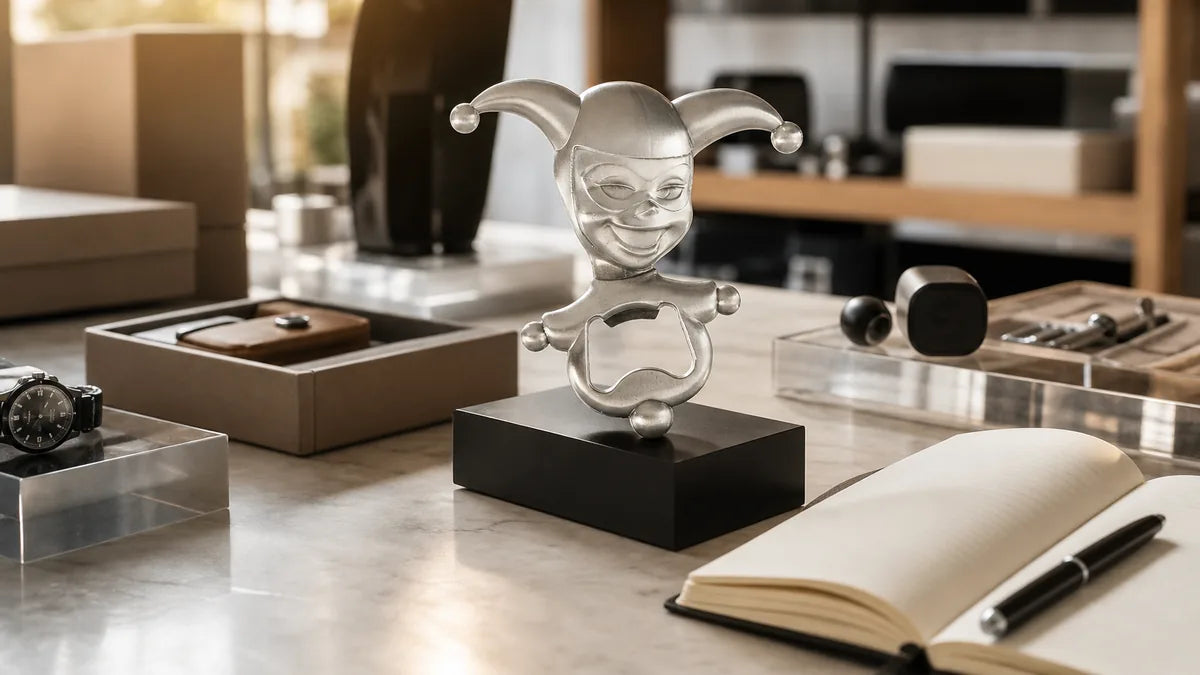
One of the biggest Father's Day traps is buying the obvious version of something he already owns. He has a bottle opener, a torch, a mug, a tool, a game, a desk gadget, a BBQ accessory or a travel cup. Congratulations: you have found the decoy gift.
The better move is replacement logic. If he already owns the basic gadget, choose a more personal, useful or adjacent gift instead. You are not trying to duplicate the thing. You are trying to improve the moment around it.
Use this quick switchboard:
| If he already has... | Avoid and choose instead |
|---|---|
| A standard gadget |
Avoid buying another basic...: Another similar gadget with no new use Choose an adjacent direction instead: A smarter accessory, organiser, charger, storage item or hobby tool |
| Plenty of mugs |
Avoid buying another basic...: A random mug Choose an adjacent direction instead: Coffee accessories, desk comfort, snack gear or a novelty item tied to his humour |
| BBQ tools |
Avoid buying another basic...: Another generic BBQ tool Choose an adjacent direction instead: Serving, drink, picnic, outdoor game or clean-up helper |
| Board games |
Avoid buying another basic...: A random complicated game Choose an adjacent direction instead: A quick family game, card game, puzzle or activity that suits the group size |
| A shed full of tools |
Avoid buying another basic...: Another tool he may already own Choose an adjacent direction instead: Measuring, lighting, organisation, safety-adjacent or project-helper categories |
| Fan merch |
Avoid buying another basic...: A risky duplicate collectable Choose an adjacent direction instead: Display, storage, barware, desk decor or nostalgia-adjacent items |
| Travel gear |
Avoid buying another basic...: Another bottle or bag Choose an adjacent direction instead: Packing, car, comfort, cable, torch or compact outdoor helpers |
This is the lane for the dad who "has everything". He probably does not have everything. He has the obvious thing. Your job is to step one ring out from the obvious thing and find the helpful companion.
That is where browsing by recipient type helps. For father figures, partners, grandfathers and hard-to-buy-for men, LatestBuy's gifts for men collection can help you move from "male recipient" into practical, playful and interest-led options without pretending every bloke is the same BBQ stereotype in cargo shorts.
Budget comfort matters more than a dramatic gesture
A surprising amount of gift panic is budget panic wearing a novelty hat. Search terms around "cheap", "under", "small", "last-minute" or "affordable" are not always about spending as little as possible. They often mean "I want this to feel appropriate".
Father's Day gifting has a wide relationship range. A child buying for Dad, an adult buying for a stepfather, a partner buying on behalf of young kids, or a family buying for Grandad may all have different comfort zones. The right spend is the one that matches the relationship and the expected level of fuss.
Instead of starting with a price, start with the role the gift should play:
- Small acknowledgement: low-pressure, simple, useful, funny or snackable.
- Main gift: a stronger category fit, activity, gadget, keepsake or hobby-related item.
- Group gift: something more substantial, often better when tied to a clear use case.
- Add-on gift: small but thoughtful, especially when paired with a card, meal or visit.
If the budget is tight, avoid overcompensating with a wildly random novelty. A small practical gift that fits his routine usually beats a louder item with no obvious home. If the budget is larger, avoid buying "more expensive" as a personality substitute. A higher-spend gift still needs a reason.
A useful budget filter is: would he use, display, share or mention it? If the answer is no, the price is not the problem. The fit is.
The risk filter: how to avoid the gift that becomes cupboard archaeology

Every Father's Day gift has risk. The aim is not to remove risk completely; that would leave you with socks and a vague sense of defeat. The aim is to choose a risk you understand.
Before you buy, run the gift through this quick confidence filter:
- Recipient fit: Does this match something he actually does, says, collects, cooks, fixes, plays, wears, drinks, reads or jokes about?
- Relationship appropriateness: Is the humour, sentiment or spend level right for your relationship?
- Setup or compatibility risk: Does it need batteries, space, technical knowledge, sizing, installation, refills, app pairing or a hobby system you are unsure about?
- Storage and clutter: Will it live on a desk, shelf, kitchen bench, shed wall, car, travel bag or game cupboard - or disappear into the mysterious third drawer?
- Public-use safety: If he opens it in front of family, workmates or kids, will it still feel okay?
- Duplicate risk: Is it too close to something he already owns?
Here is the buyer-confidence module in plain English:
| Confidence check | Details |
|---|---|
| Practical helper |
Choose this when...: He has a clear routine or problem it improves Skip this when...: You are guessing about technical specs Safer fallback: Choose a simpler everyday-use category |
| Funny or novelty gift |
Choose this when...: The joke matches his humour and setting Skip this when...: It relies on embarrassment or shock Safer fallback: Choose useful novelty or activity-led fun |
| Hobby gift |
Choose this when...: You know the hobby lane well enough Skip this when...: The hobby has exact compatibility rules Safer fallback: Choose storage, display or general accessories |
| Sentimental gift |
Choose this when...: The relationship supports a meaningful gesture Skip this when...: He dislikes keepsakes or public emotion Safer fallback: Choose nostalgia or shared activity instead |
| Gadget-adjacent gift |
Choose this when...: He likes tinkering or convenience Skip this when...: Setup may be annoying or incompatible Safer fallback: Choose a lower-tech accessory |
This filter is especially helpful for "last-minute" searches. Last-minute does not have to mean careless. It means you should favour lower setup risk, broader usefulness and clearer recipient fit.
Fallback gifts that still feel like you thought about him
Fallback does not mean boring. It means resilient. A good fallback works when you do not know the exact model he owns, the niche fandom he is into this month, or whether his shed already contains the object you were about to buy.
The best fallback categories tend to be:
- Shared games and activities: good when the gift can become a family moment rather than a possession.
- Desk, lounge or shed helpers: useful for dads who like comfort, tinkering or order.
- Kitchen, drink or BBQ-adjacent accessories: safer when connected to hosting, cooking or relaxing.
- Travel, car or outdoor helpers: suitable for dads who like weekends, road trips or practical preparedness.
- Nostalgia and display-adjacent items: useful when he has interests, collections or a fondness for "remember when" stories.
- Small novelty with a use: fun, but with a job beyond existing as a punchline.
If you are buying for a dad who truly gives you nothing to work with, pick the least risky axis: use, share or smile. A gift should do at least one of those. The best ones do two.
Examples of useful fallback logic:
- If he is practical but not flashy, choose an everyday helper.
- If he is social, choose a game, drink accessory or shared activity.
- If he is nostalgic, choose something with a retro, collectable or display feel.
- If he is outdoorsy, choose a compact travel or weekend-use helper.
- If he is impossible, choose a broad gift path and narrow by what he would actually use in the next month.
When in doubt, do not ask "Is this impressive?" Ask "Can I picture him using this?" If you can imagine the moment, you are much closer.
How to turn search panic into a five-minute decision

If you are staring at twenty tabs and slowly becoming the family's unofficial procurement department, use this five-minute method.
- Name the recipient properly. Dad, stepdad, Grandad, partner, father-in-law, new dad or father figure all carry different tones.
- Pick the gift role. Is it useful, funny, activity-led, nostalgic, sentimental or a small acknowledgement?
- Choose the lowest-risk category. Avoid technical, size, compatibility or duplicate-heavy items unless you know the details.
- Apply the adjacent upgrade rule. If he owns the basic version, choose a companion, organiser, upgrade or experience-adjacent item.
- Check the opening moment. Will it make sense when he unwraps it, or will you need a TED Talk to explain it?
Here is the quick decision version:
| If your main worry is... | Start here |
|---|---|
| "I don't know what he likes anymore." | Recipient and broad gift discovery |
| "He owns all the obvious stuff." | Adjacent upgrades and hobby helpers |
| "I need something safe." | Practical, low-setup, everyday-use categories |
| "I want it to be fun." | Games, novelty with a use, barware or activity-led gifts |
| "I do not want to overspend." | Small acknowledgement or add-on gift logic |
| "He is a collector or nostalgia person." | Display, storage, retro or interest-adjacent paths |
This is why LatestBuy's broad browsing approach suits Father's Day panic. You can start wide, then narrow by who he is, what he does and how risky the choice feels. That is much better than scrolling a generic list and hoping the algorithm knows your dad better than you do.
Father's Day gift search FAQ
What do people usually search when they panic-buy Father's Day gifts?
Common search patterns tend to start broad, such as "Father's Day gifts" or "gift ideas for dad", then narrow into intent-led phrases like "practical gifts for dad", "funny dad gifts", "gifts for men", "last-minute Father's Day gifts" or "dad who has everything". Those searches show uncertainty around fit, budget, usefulness and originality.
How do I choose for a dad who says he wants nothing?
Treat "nothing" as a request for low fuss, not no gift. Choose something small, useful, activity-led or interest-adjacent. Avoid dramatic gestures unless your relationship supports them. A practical helper, shared game, desk upgrade, drink accessory or nostalgic item can feel thoughtful without making a big production of it.
What should I avoid buying for Father's Day?
Avoid gifts with high compatibility risk unless you know the details: exact tech accessories, niche hobby components, clothing sizes, specialised tools or duplicate collectables. Also be careful with humour that may be awkward in front of family. If the joke needs too much explanation, choose useful novelty instead.
Is a practical gift too boring for Father's Day?
Not if it fits his real life. Practical gifts work when they improve a routine, solve a small annoyance or support something he already enjoys. The key is adding relevance. A practical gift tied to his desk, shed, kitchen, travel, games night or weekend habits feels much more thoughtful than a generic "useful" item.
How do I make a last-minute Father's Day gift feel considered?
Use a clear decision path: recipient, role, category, risk check. Choose lower setup risk and stronger everyday relevance. Add a card that explains the thought behind it: "for your next BBQ", "for the shed", "for games night" or "for your desk". Context makes a simple gift feel deliberate.
Browse with a plan, not panic
Father's Day gift panic is really decision overload in a dad-shaped hat. The way out is not a longer list. It is a clearer route: recipient fit, occasion pressure, budget comfort, category trade-offs and a safe fallback path.
Start with broad LatestBuy gifts if you need inspiration, use the gift guide when you want curated browsing, or head to gifts for men when the recipient path is the clearest starting point. Follow the clues, dodge the duplicate gadget, and choose the gift that makes sense when he actually opens it.
For a relevant browse path, compare this with electronics and gadgets and Family Games and Top Selling Gifts.